


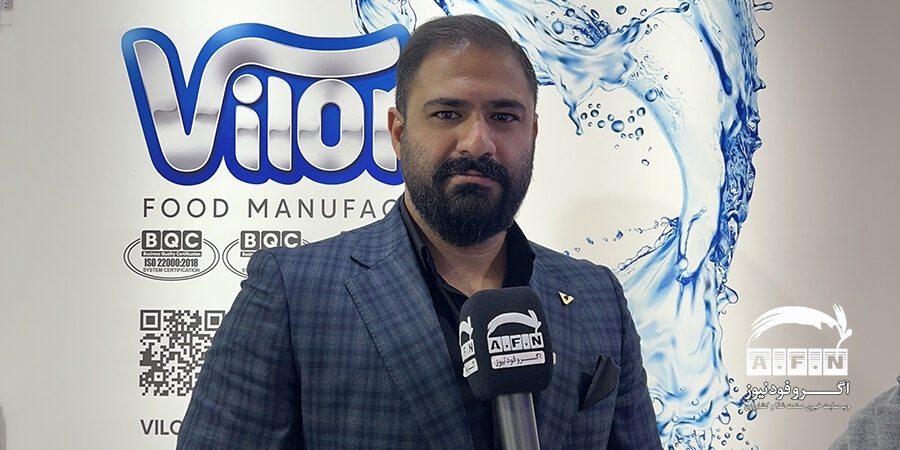
According to AgroFoodNews, Farhad Eskandari, CEO of Vilo Protein Pars (Vilora), spoke to the publication on the sidelines of the Third Eurasia Trade Exhibition about Vilora’s participation in the event.
Eskandari stated: “Vilora is participating in this exhibition with the aim of increasing exports to the region, benefiting from its IR registration code, which is registered in Russia and the Eurasian market.”
He added: “Overall, the country’s exports, including in the oil and gas sector, are not currently in a favorable position, while food exports are also facing numerous challenges. The requirement to settle foreign-exchange obligations is one of the main reasons for the decline in food exports. Traders exporting to Russia are also facing difficulties in repatriating their export revenues.”
The CEO of Vilo Protein Pars stated: “Despite the decline in exports and the existing challenges, our company is making every effort to overcome barriers to exports and maintain its presence in international markets.”
The food industry executive identified participation in international treaties and the adoption of FATF and Palermo Convention frameworks as potential ways to facilitate financial cooperation with other countries and support export development. He noted that even financial cooperation with Russia and China, two of Iran’s major trading partners, faces significant obstacles.
He said: “Iran should first work toward resolving its international sanctions-related restrictions and then, through effective marketing, expand its presence in international markets.”
Regarding the reasons behind the increase in canned tuna prices, the CEO of Vilo Protein Pars said: “Foreign-exchange shortages for the importation of raw materials, existing sanctions, and the unequal allocation of fish import quotas are among the factors contributing to disruptions in the import of fish as a raw material for this industry. As a result, some producers do not have permits to import fish, while others that hold the necessary permits face difficulties in meeting the conditions required for imports.”
He further stated that, in his view, the Iranian Veterinary Organization’s regulations concerning the import of tuna species are inconsistent with European Union regulations and the standards applied by internationally recognized authorities. He added that the Ministry of Agriculture Jihad had also delayed the seasonal allocation of fish import quotas and that, as of October 2024, no new quota had been opened for fish imports.
Eskandari further stated: “An increase in domestic fish prices, higher prices for cans and edible oil, and, ultimately, the increase in the official exchange rate from IRR 500,000 to IRR 720,000 per U.S. dollar over a two-month period resulted in a 14% increase in the price of canned tuna after 18 months.”